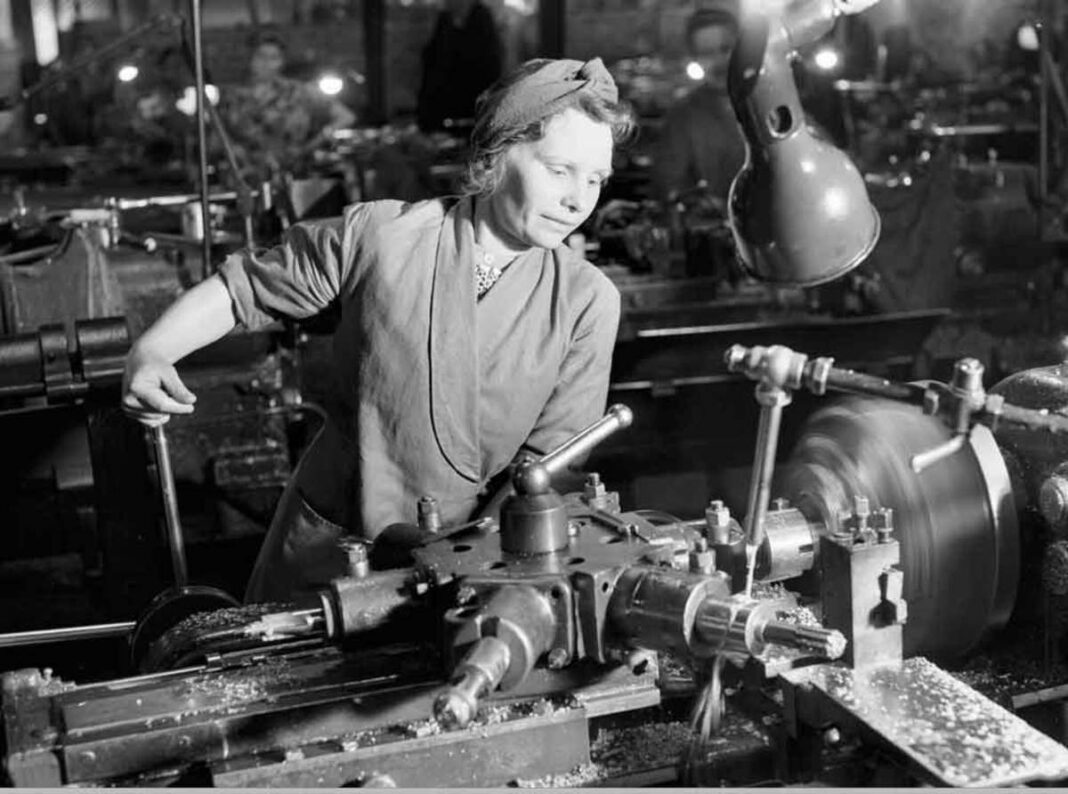

War is a great tragedy for any nation. Leeds endured the impact of two world wars, with scars from the Second World War still visible today. Fortunately, the city was not occupied by Nazi forces, as Britain maintained its independence. However, the country’s economy shifted to a war footing, and its citizens, including the people of Leeds, played their part in defeating Nazi Germany. Today, we focus on the women of Leeds who worked in local industries during the war. Next on leedsyes.com.
Women Took Over Factories and Mills in Leeds
During World War II, Leeds was home to numerous industrial enterprises engaged in the production of weapons, ammunition, and military equipment. With men joining the armed forces en masse, women stepped up to work in factories and mills.
One notable enterprise was the Burton factory. Founded by Montague Burton in Chesterfield in 1903, the company expanded to establish a massive facility in Leeds. During the war, the factory shifted from producing men’s suits to manufacturing military uniforms. Statistics reveal that the Leeds factory produced over 13 million uniforms for the navy, army, and Royal Air Force. Women far outnumbered men in this field.
Women Produced More Than Just Uniforms
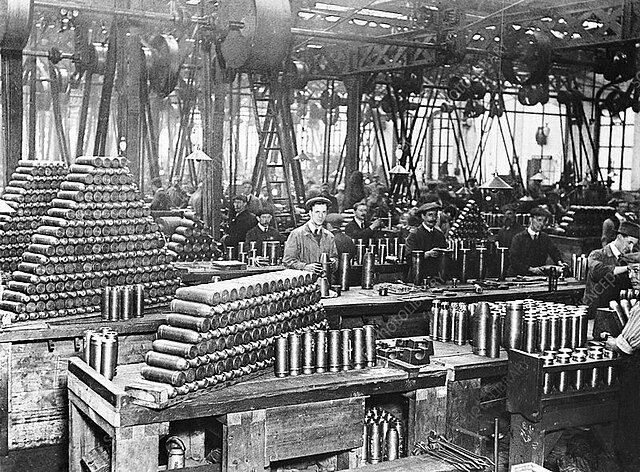
Women didn’t just work in textile factories, which had been repurposed to produce military uniforms and parachutes; they also contributed to factories manufacturing aircraft, tanks, ships, and ammunition.
One such enterprise was the Leeds Royal Ordnance Factory. Established in 1941 as part of a broader program to expand military production, the factory produced artillery shells, mortars, and other explosives. This facility was vital for supporting the British armed forces. Working there required precision, responsibility, and discipline.
Women not only made significant contributions to engineering but also changed societal perceptions of what they could achieve. Their efforts demonstrated to the world that they could handle traditionally “male” roles.
After the war, part of the factory’s production shifted to civilian needs, while another part continued manufacturing military goods.
Women also worked at other key Leeds factories, such as:
- Joseph Banks & Co., producing military uniforms
- Leeds Forge Company, manufacturing heavy metal components for machinery
- Ramsbottom’s, producing military vehicles
- Various local steel and engineering firms
Shifting Traditional Roles
World War II brought about a lasting transformation in societal norms, with men gaining a newfound respect for women’s contributions across various sectors. Before the war, most women in Leeds were confined to domestic duties or worked in the service industry. The war, however, saw them stepping into roles as factory workers, mechanics, truck drivers, and engineers.
Additionally, many women in Leeds joined auxiliary military services, such as the Women’s Auxiliary Air Force (WAAF) and the Auxiliary Territorial Service (ATS). They worked in telecommunications, intelligence, administrative units, and as nurses. Some even served as police officers, firefighters, and rescue workers. Despite the challenges, the women of Leeds rose to the occasion.
Women also played a vital role in volunteering. They joined charitable organizations such as the Women’s Voluntary Service (WVS), which helped organize evacuations, provided food, and supported those affected by the war.
These experiences led to greater societal participation and significant advancements in industrial and labor markets. Women gained new rights and freedoms during the war, and many chose to continue working in factories and other industries after its conclusion. They learned to live independently and provide for themselves and their children.
According to Winston Churchill, Britain’s armed forces lost over 300,000 personnel during World War II. Civilian casualties totaled more than 67,000.
The women of Leeds played a pivotal role during these trying times, demonstrating resilience and courage. Their contributions not only supported the war effort but also reshaped societal norms and paved the way for future generations of women to excel in various fields.
We hope this material has provided valuable insights into Leeds’ history and the remarkable contributions of its women during World War II.