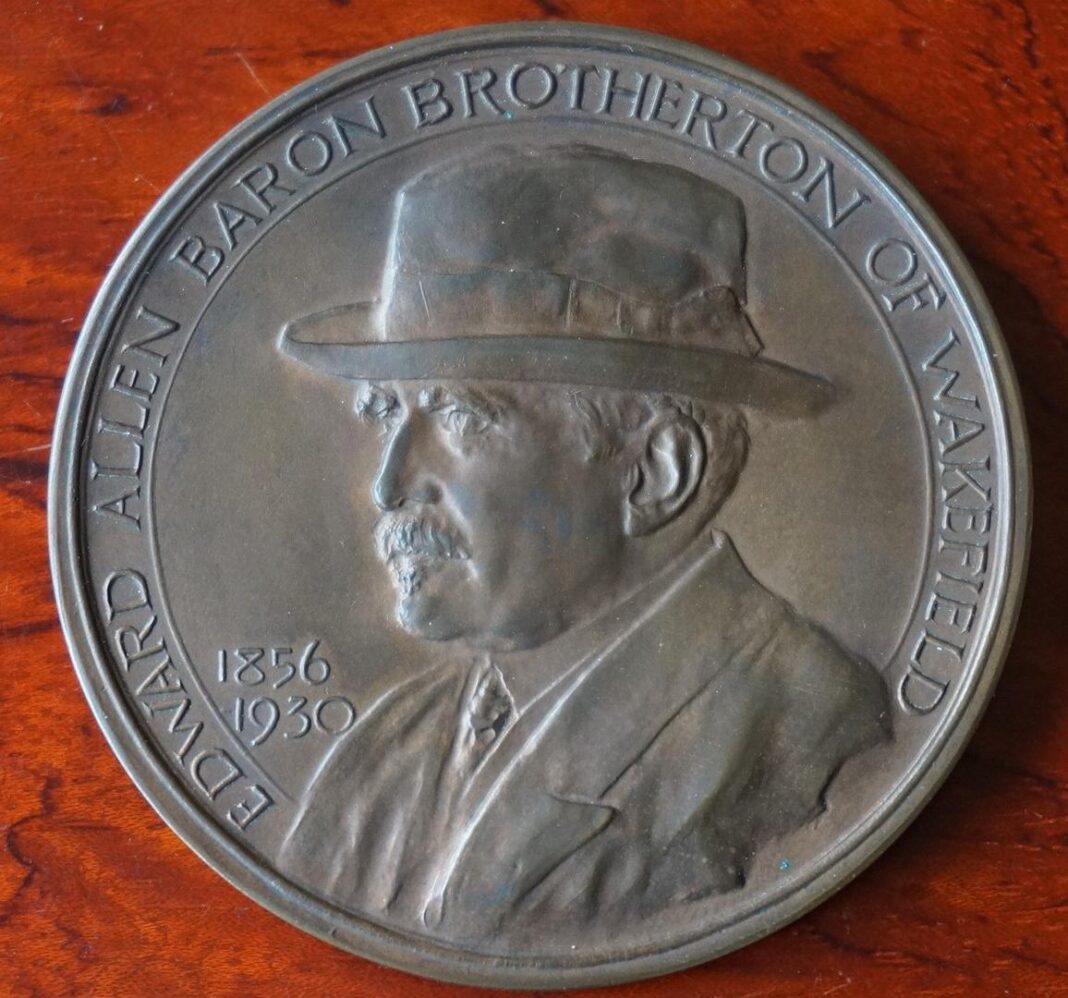

The political history of Leeds is as fascinating as its development into one of Britain’s economic hubs. Behind the city’s progress were wise leaders and visionaries whose efforts shaped Leeds into what it is today. Among these figures was Edward Allen Brotherton, an industrialist, businessman, politician, and philanthropist. As Lord Mayor of Leeds, he left an enduring legacy, including the Brotherton Library. Next on leedsyes.com.
Childhood and Early Life
Edward Brotherton was born in 1856 in Manchester. His father worked in the yarn industry, providing the family with a modest livelihood. At 14, Edward attempted a life at sea, but the experience proved unsuccessful. The following year, he left school to work in a household goods store before becoming an assistant in a chemical laboratory. By the age of 19, Edward was employed at a chemical plant in Wakefield, West Yorkshire.
Business Ventures
With family support, Brotherton co-founded Dyson Brothers and Brotherton in 1878, manufacturing ammonium sulfate and supplying ammonia for the textile industry and gold extraction. Eleven years later, Brotherton ended this partnership to establish his own company, Brotherton and Co., which became one of the largest private chemical firms in the country. Initially based in Wakefield, the company later expanded to Chambers and Leeds.
Brotherton and Co. operated successfully even after his death, continuing until 1957, when it was sold and rebranded.
Political Career
Brotherton was as active in politics as he was in business. In 1901, he became an alderman of Wakefield, and a year later, he was elected as a Member of Parliament for Wakefield representing the Conservative Party, a role he held for eight years. He returned to Parliament in 1918. Between 1911 and 1915, he served as an alderman of Leeds and became Lord Mayor of the city in 1913–1914.
As Lord Mayor, Brotherton used his wealth to establish the West Yorkshire Regiment, earning him the title of Honorary Colonel.
Brotherton’s interests extended beyond politics and business; he was an avid collector of books, manuscripts, and letters. In 1926, a catalogue of his collection was published, and his library became a hub for scholars and intellectuals.
In 1927, he donated £100,000 to the University of Leeds to build a new library. Three years later, he laid the foundation stone for the Brotherton Library, which opened in 1936. The library housed 35,000 books, 400 manuscripts, 4,000 charters, and 30,000 letters from Brotherton’s collection. After his death, the university received a further £100,000 from his estate.
The Brotherton Library, a neoclassical building designed by Lanchester & Lodge, is now a Grade II listed structure. It remains a centre for art collections, linguistic research, and special collections.
Personal Life
In 1918, Brotherton was made a Baronet of Wakefield, and in 1929, he was elevated to the peerage as Baron Brotherton of Wakefield. He married once, to Mary Jane Brooks, who tragically died in childbirth. Brotherton never remarried, and without a male heir, his titles became extinct upon his death.
Edward Brotherton lived in Leeds until his death in 1930 at the age of 74.
Edward Brotherton’s contributions to Leeds and the broader region continue to be celebrated. His work as an industrialist, politician, and philanthropist reflects a commitment to progress and public service. Modern politicians could learn from his example, remembering the importance of serving the public interest with integrity and foresight.
We hope this article has shed light on Edward Brotherton’s life and impact.