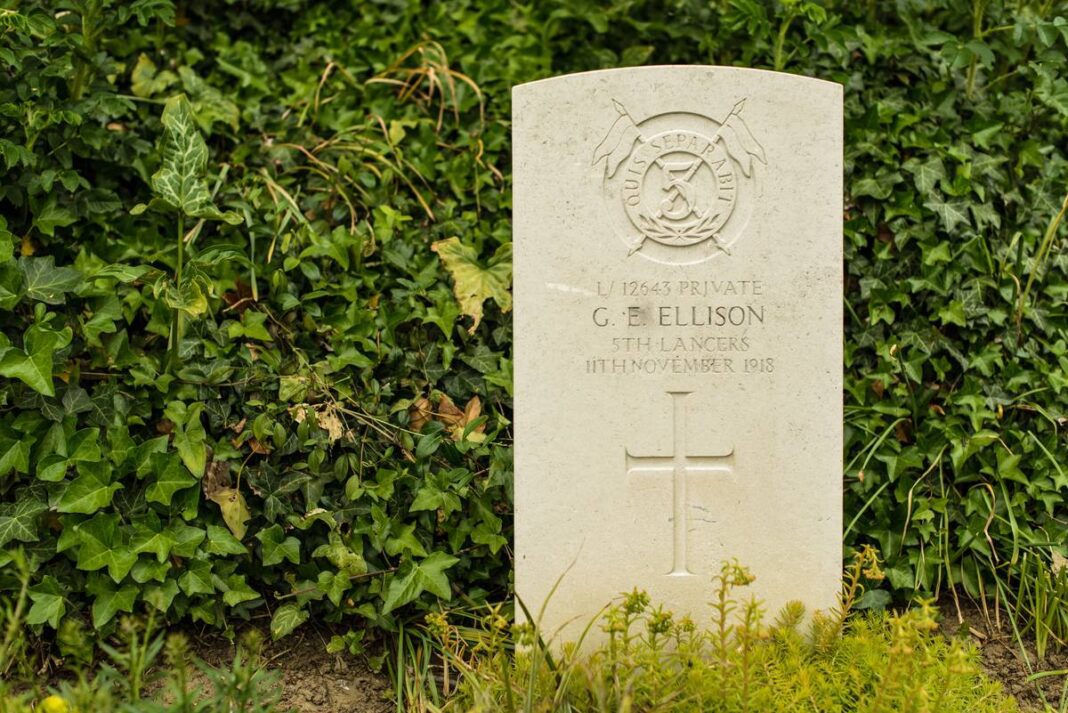

War is a devastating chapter in the history of any nation. Armed conflicts bring destruction, death, and economic ruin to the affected regions. The United Kingdom endured the horrors of two world wars, with each leaving an indelible mark on its people and land. As we remember those difficult years, we honor the sacrifices made for peace. Today, we recount the story of Private George Edwin Ellison, the last British soldier killed in World War I, just 90 minutes before the armistice came into effect. Next on leedsyes.com.
A Veteran of Many Battles
George Ellison was born in York in 1878 and later moved to Leeds. In 1902, he first joined the regular British Army. After ten years, he left the military, got married, and began working as a coal miner. However, the outbreak of World War I in 1914 brought him back to service. He joined the 5th Royal Irish Lancers, participating in numerous battles on the Western Front:
- Battle of Mons (1914)
- Battle of Ypres
- Battle of Armentières
- Battle of La Bassée
- Battle of Lens
- Battle of Loos
- Battle of Cambrai
Ellison was killed by a sniper 90 minutes before the armistice took effect on November 11, 1918. His death occurred in a forest near Mons, Belgium. At the time of his passing, he was 40 years old.
Ellison’s grave is located in St. Symphorien Military Cemetery, directly opposite that of John Parr, the first British soldier killed in World War I.
George left behind a wife and son in Leeds. Tragically, he was killed just five days before his son’s birthday. His brother, Frederick Ellison, also lost his life in the war in 1917.
Preserving His Memory
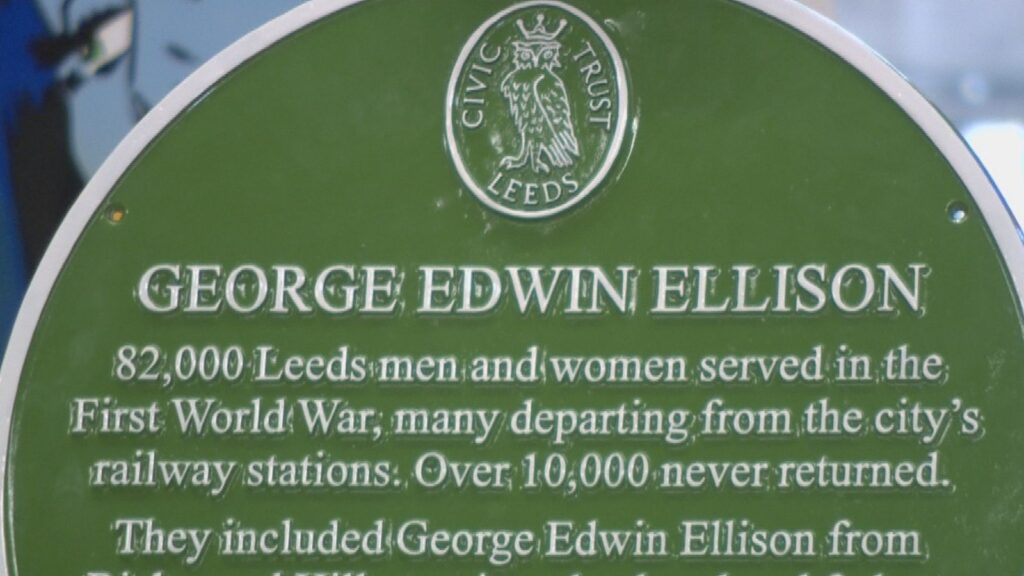
In 2018, to mark the centenary of George Ellison’s death, Leeds Civic Trust unveiled a commemorative plaque at Leeds railway station. The ceremony was attended by two of his granddaughters. Ellison’s story was also featured in the 2008 BBC documentary “Timewatch”. A decade later, it inspired poet Philip Parker to write “A Goodnight Kiss”.
World War I in Leeds: An Overview
World War I was a global conflict between the Central Powers and the Allies, with the UK fighting on the side of the Allies. The war, involving 38 nations, had a significant impact on Leeds.
Around 80,000 men from Leeds joined the war effort, many of whom never returned. The city also contributed by producing goods essential to the war, including textiles for military uniforms, machinery, and ammunition.
The war, which began in August 1914, was expected to end within a few months. Unfortunately, it dragged on for over four years, claiming the lives of approximately 10 million soldiers out of the 74 million who fought. This staggering loss highlights the heavy price paid for political and territorial realignments.
For the powerful, these numbers may have been mere statistics, but for families like George Ellison’s, they represent unimaginable personal loss. His life was one among millions, yet his story reminds us of the countless unnamed heroes who died and were buried far from home.