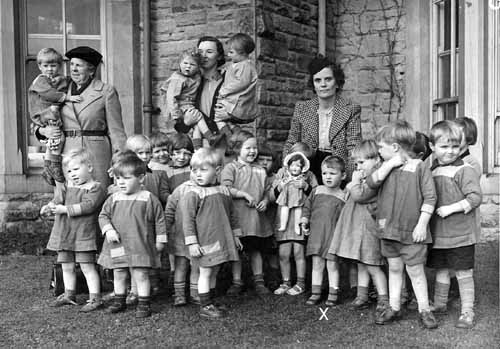

World War II brought devastation not only to the United Kingdom but to the entire world. It claimed millions of lives and left towns and cities in ruins. Leeds, too, experienced the horrors of war, enduring repeated bombings by German aircraft. These tragic chapters are hard to bear but essential to remember as a warning to future generations about the importance of peace. Despite the war, the people of Leeds continued to live, work, study, and pursue cultural activities. Astonishingly, they adapted to frequent air raids while striving to maintain a sense of normalcy. Next on leedsyes.com.
Theatre Attendance in Leeds
Despite the war, residents of Leeds found ways to engage in cultural and educational activities. Psychologists suggest that the human mind adapts to survive, seeking distractions to cope with stress and trauma. Leeds residents sought leisure and learning to maintain their mental health.
Although war restrictions impacted cultural institutions, performances and concerts were still organised to boost public morale. People flocked to theatres, cinemas, and cafés to find respite and refresh their spirits.
Grand Theatre Leeds, one of the city’s most iconic and historic venues, continued operating throughout the war. Residents and visitors attended theatrical performances designed to uplift and support the audience during these trying times.
Built in the late 19th century, Grand Theatre was a significant cultural centre in Leeds. Established in the 1870s by George Corson and architect James Robinson Watson, the theatre opened in November 1878 with Giuseppe Verdi’s opera Aida.
Before World War II, the theatre underwent renovations in the 1930s, preparing it for its role as a cultural beacon. After the war, Grand Theatre became a hub for performances and events, with its historic building periodically restored to preserve its legacy.
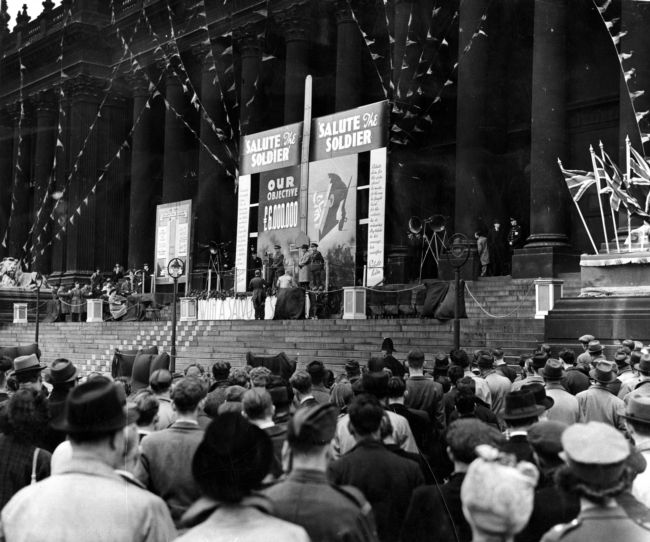
Education During the War: University of Leeds
Most men in Leeds were conscripted into the armed forces, including students and faculty members of the University of Leeds. Many joined the military, the Royal Air Force, or other auxiliary services. This significantly reduced the university’s student population. Despite these challenges, the university remained operational. Some faculties functioned with restrictions, but new students, predominantly women, continued to enrol.
Special courses in technical and medical sciences were introduced to meet wartime demands. Female students also joined auxiliary military services, such as the Women’s Auxiliary Air Force (WAAF), working as telegraphists, mechanics, and administrative staff.
During World War II, the University of Leeds made significant contributions to scientific research for military purposes. Its chemistry department developed explosives, new materials, and components for military equipment. The medical faculty focused on advancing surgical methods, treating wounded soldiers, improving protection against chemical attacks, and addressing the effects of gas exposure.
Some university buildings were repurposed as military quarters or hospitals. After the war, the university resumed full educational operations, with many returning students continuing their studies.
Leeds residents also sought solace in books during the war. Libraries remained open, providing access to various literature and hosting free public lectures. Books offered an escape from the harsh realities of daily life.
Cinemas in Leeds played a vital role in maintaining public morale. In addition to films, they screened newsreels from the front and propaganda films that boosted civilian spirits.
The cultural and educational activities of Leeds residents during World War II highlight their resilience in the face of unimaginable challenges. While enjoying a theatre performance one day and fearing an air raid the next might seem surreal to modern society, this reality underscores the importance of valuing every moment of life.