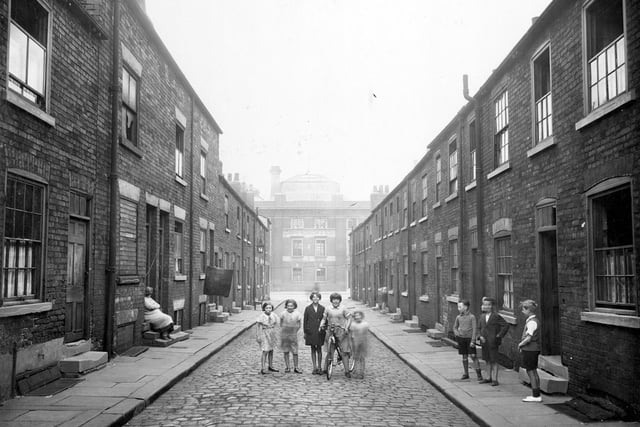

World War II remains one of the darkest chapters in global history. Dozens of nations suffered under fascism and Nazism, with Jewish populations facing systematic persecution and extermination. An estimated 5 to 6 million Jews perished during the Holocaust. Today, we discuss how Jews found refuge in Leeds during the war and beyond, as the city has been home to a Jewish community since 1861. Next on leedsyes.com.
The Jewish Community in Leeds
During World War II, many European cities welcomed Jewish refugees fleeing the horrors of Nazism. Leeds was among the cities offering refuge, having already established a Jewish community well before the war.
In 1840, Leeds was home to a small Jewish population of 60 individuals. By 1861, this number had grown to 219. Over the next three decades, the Jewish population surged to 8,000. By 1914, 25,000 Jews lived in Leeds, and during the 1930s, refugees from Nazi Germany and Holocaust survivors further expanded the community. By 1945–1950, Leeds was home to approximately 29,000 Jews. Although numbers began to decline as many emigrated to Israel, Leeds retained the largest Jewish population of any British city into the 1970s.
Why Jews Chose Leeds
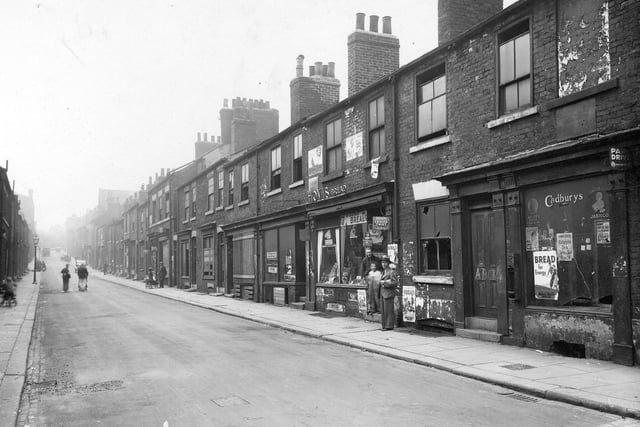
Leeds’ long-standing role as a hub for the wool trade attracted Jewish entrepreneurs. One notable figure, Herman Friend, became the first Jew to enter the city’s burgeoning wholesale tailoring business.
During the 1930s, Jewish refugees and Holocaust survivors found employment in Jewish-owned factories. This influx included many highly educated individuals fleeing Europe. In this period, Leeds established a local branch of the Association of Jewish Refugees to support those escaping persecution.
Religion played a vital role in the community, with numerous synagogues established in Leeds. The first synagogue opened in 1846 in a converted house on Beck Rockingham Street. This was later replaced by the Great Synagogue on Belgrave Street, which operated until its closure in 1983.
Other notable synagogues included the one on St John’s Square, opened in 1876, and its successor, the New Synagogue on Chapeltown Road, inaugurated in 1932. In 1986, the United Hebrew Congregation opened a synagogue on Shadwell Lane.
Education was a cornerstone of the Jewish community in Leeds. In 1876, a Jewish Free School was established. Later, in 1968, the Brodetsky Primary School opened, followed in 2013 by the Leeds Jewish Free School, providing secondary education.
Antisemitism in Leeds
Antisemitism—intolerant and hostile attitudes toward Jews—was a global issue during the Nazi era. While Jews sought refuge in countries like the UK, they still faced discrimination in Leeds.
Before World War II, antisemitic acts were not uncommon in Leeds. Some cafés refused to serve Jews, and the peak of this hostility came during the 1917 Leylands riots, where Jewish property was vandalised, and shops were looted. Discrimination also occurred in the workplace, prompting many Jews to anglicise their names.
The Jewish community established its own golf club in 1923 after being excluded from Leeds’ existing clubs, highlighting the pervasive nature of antisemitism at the time.
The Jewish community in Leeds has endured both triumphs and challenges. From its establishment in the 19th century to its role as a refuge during World War II, the community has contributed significantly to the city’s cultural and economic life. We hope this material has been informative and provided insights into the experiences of Jews in Leeds throughout history.