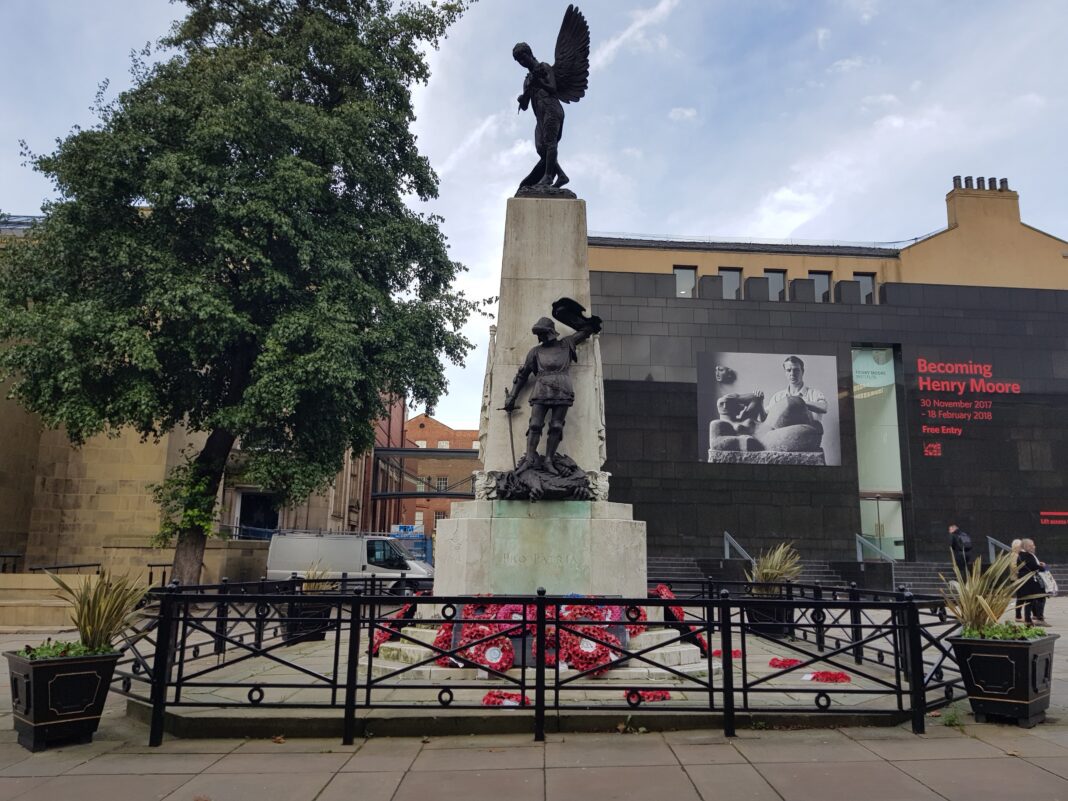

War always brings tears, pain, despair, and fear. It leaves destruction, death, and shattered lives in its wake. The United Kingdom endured both World Wars, which claimed millions of lives and devastated infrastructure, industries, and homes. In Leeds, the War Memorial on Victoria Square near The Headrow stands as a poignant tribute to those who lost their lives in World War I. The memorial also serves as a reminder of the immense price humanity pays for conflict. Today, we delve into the history of the Leeds War Memorial. Next on leedsyes.com.
History of the Memorial’s Creation
Following the end of World War I, the Royal Academy invited sculptors to submit designs for war memorials. Henry Charles Fehr’s design was chosen for Leeds, standing out for its unique and evocative elements.
Initially, the memorial was erected in the city square but was later moved to Victoria Square near The Headrow. It was officially unveiled on 14 October 1922.
Before the 1930s, the area now occupied by Victoria Square was filled with buildings. However, city planners decided to expand Park Lane and create a boulevard. This redevelopment included relocating Leeds Cathedral, creating a public garden (officially opened by Lord Mayor Tom Coombs), and moving and reconsecrating the war memorial.
Repairs During and After World War II
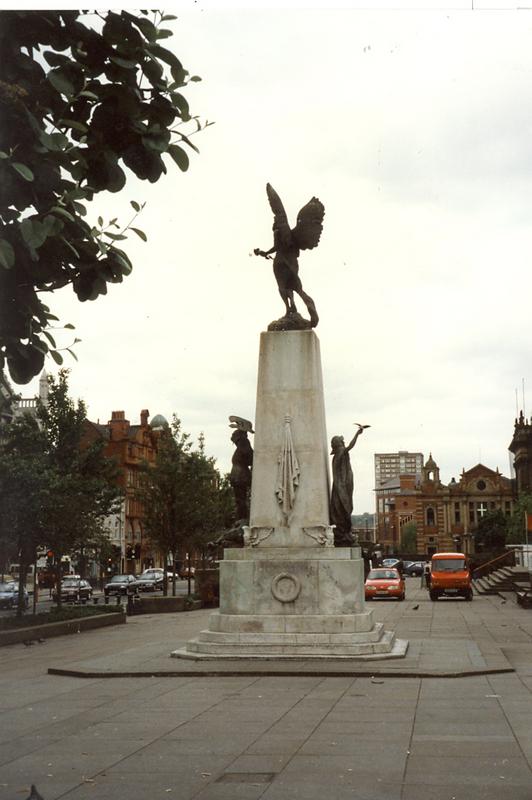
During World War II, in 1940, a crack was discovered in the memorial’s obelisk. It was removed for repairs but not reinstalled immediately, as fears arose that it might be damaged during the Leeds Blitz. The memorial was finally re-erected in 1946.
However, in 1965, strong winds caused damage, leading to its dismantling once again. Two years later, the memorial was covered with marble, while the Winged Victory statue, originally part of the monument, was relocated to Cottingley Crematorium. Unfortunately, the statue deteriorated over time and was removed in 1988.
In 1992, a new statue, the Angel of Peace, was added to the memorial, symbolising hope and remembrance.
The United Kingdom entered World War I on 4 August 1914, responding to Belgium’s appeal for help after Germany violated its neutrality. Declaring war on Germany, Britain fought alongside the Allies in a conflict that historians often describe as a victory without winners.
The war claimed the lives of 900,000 Britons, with an estimated total of 3 million deaths worldwide. The financial toll was also staggering, with Britain’s national debt rising from £650 million in 1914 to £7,832 million in 1920.
Across the UK and the world, countless memorials, sculptures, and monuments honour the sacrifices of those who perished in the First and Second World Wars. These sites are not just places of remembrance but also powerful reminders of the devastating consequences of war. Tragically, the lessons of the past are often forgotten, as conflicts continue to erupt globally. As of 2023, there were 183 regional and local conflicts worldwide.
The Leeds War Memorial is a testament to the resilience and sacrifice of those who endured World War I. It reminds future generations of the devastating costs of war and the importance of striving for peace. We hope this material has offered valuable insights and inspired thoughtful reflection.