
War is a tragedy for an entire nation, and world wars are tragedies for the whole world. Unfortunately, our city endured two world wars, both of which shaped the formation and development of Leeds. Today, we will discuss what the city of Leeds was like after the end of the Second World War. More on leedsyes.com.
Challenging conditions for the city
During the Second World War, Leeds lived under difficult conditions that radically changed the daily lives of its residents. It is worth noting that Leeds immediately reoriented its industry to meet the needs of the war effort. Military factories produced aircraft, tanks, ammunition and uniforms. For example, Blackburn Aircraft manufactured planes, while Vickers Armstrong supplied the army with around 9,000 units of ammunition.
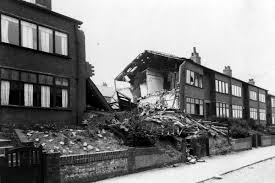
Leeds was also active in collecting donations for the military. Fundraising events, such as the “Wings for Victory” exhibition, helped raise money to support the arming of the forces. However, the lives of residents were constantly under threat from enemy air raids. Over the course of the war, the city suffered nine such raids, the largest occurring in March 1941 when about 40 German bombers destroyed 200 buildings. In total, the war claimed 77 lives in the city.
What the war left behind
As you can see, the Second World War dealt a heavy blow to the city’s industry, which had long been the backbone of its economy. This caused a decline in key sectors such as engineering and the textile industry, both of which had once been leading forces in Leeds.
In general, after the war ended, Leeds faced the challenges of reconstruction and modernisation. An important feature of the post-war period was the gradual transformation of the city from an industrial centre into a financial and service hub. Significant changes in employment and the economy began to emerge in the 1960s, as industrial decline gave way to the growth of finance, education, healthcare and commerce. In time, Leeds became the second most important financial centre in the United Kingdom after London, particularly in the legal and banking sectors.
Before the war, Leeds was an industrial powerhouse, renowned for its engineering and textile manufacturing, which had driven economic growth in the 18th and 19th centuries. However, in the post-war period, production volumes in these industries fell sharply. In 1951, half of Leeds’ economically active population worked in engineering, but by 1971 this proportion had fallen to one third.
The city also experienced significant social changes. Leeds attracted migrants from other parts of the United Kingdom as well as from former British colonies, enriching its cultural life. In particular, there was a growing community from South Asia, who developed their own neighbourhoods and businesses.
Alongside economic changes, culture and sport also evolved. For example, Leeds United Football Club was revived after the war and, in the following decades, became a symbol of the city. After returning to the Second Division, the club spent years outside the top tier of English football until the late 1980s, when it began a gradual resurgence and achieved the status of one of the country’s leading teams.
Infrastructure also changed. The city underwent modernisation, new residential areas and roads were built, and transport links were improved.
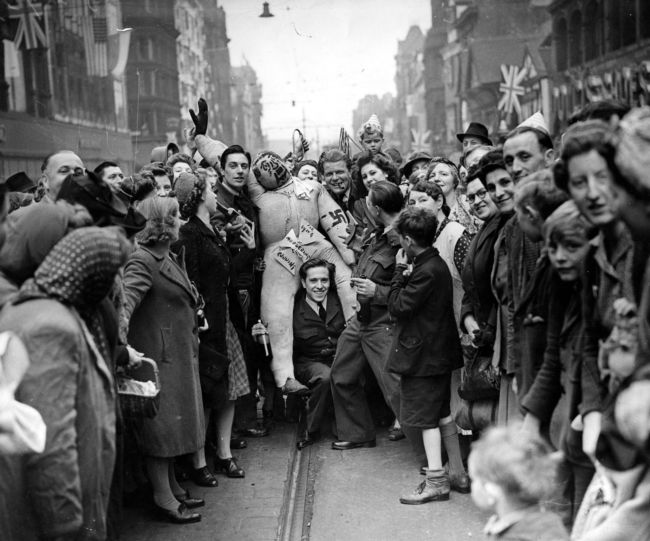
Leeds began to recover gradually after the end of the world war. But the most important thing was the arrival of long-awaited peace. The world no longer lived in fear, and people finally enjoyed a peaceful sky, free from rockets and bombs.
We hope this article has been informative and that you have learned more about our home city.