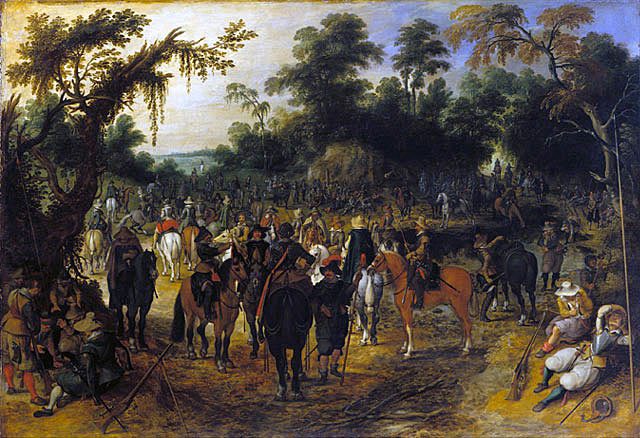

Leeds, a beautiful and bustling city, is steeped in history. Its past hasn’t always been peaceful, marked by wars, battles, and epidemics. Today, we delve into the Battle of Leeds, which occurred during the First English Civil War on 23 January 1643. More details are available on leedsyes.com.
Leeds: Economic and Tactical Importance in the War
In December 1642, Sir William Savile established a royalist garrison in Leeds. The First English Civil War had officially begun in August of the same year when King Charles I raised his royal standard in Nottingham and declared Parliament traitors. This act ignited a long-standing tension that had been simmering for decades. The term “civil war” itself derives from the Latin bellum civile, commonly used to describe internal conflicts in Ancient Rome.
Leeds held both economic and tactical significance during the war. Historically, the city was a centre for the wool and cloth industries, crucial to the region’s economy. Strategically, Leeds controlled key routes to York, Chester, and Hull, making it a valuable asset for access to supplies from the Vale of York. At the time, the city had a population of approximately 6,000 people. However, Leeds lacked natural defences and city walls, leaving it vulnerable.
The Battle and Its Consequences for Leeds
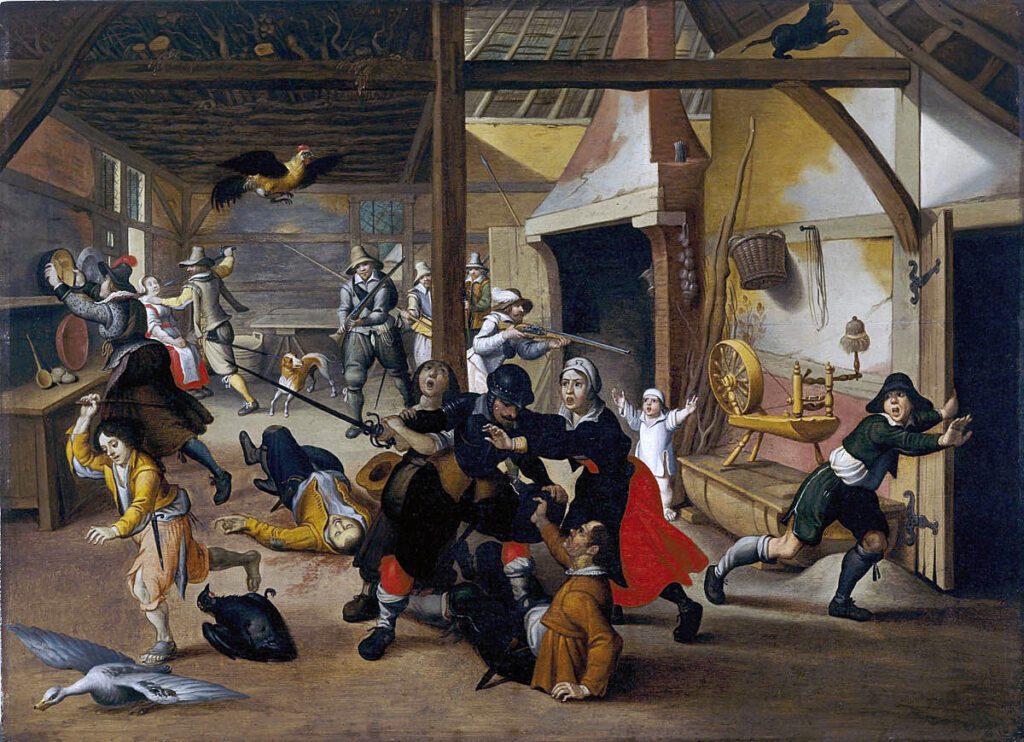
The battle commenced on 23 January 1643, around 2:00 PM, when Thomas Fairfax launched an assault on Leeds. Five companies of infantry attacked the city from the south, advancing along the trench near the river and targeting the bridge. Simultaneously, other forces attacked from the north, near the church, and the west, along Head Row.
Fairfax’s forces captured 460 royalist soldiers, 14 barrels of gunpowder, two cannons, and a cache of weapons and ammunition. The royalists suffered approximately 50 fatalities, while the Parliamentarians lost around 25 men.
Leeds was seized by the Parliamentarians, and propaganda pamphlets were published to celebrate the victory. However, the following month, Queen Henrietta Maria returned from Europe with reinforcements, including troops, weapons, and funds. Royalist commander George Goring defeated Fairfax at the Battle of Seacroft Moor, capturing around 800 soldiers, though Leeds remained under Parliamentarian control. It wasn’t until the Battle of Adwalton Moor that most of Yorkshire fell to the royalists.
In 1644, Fairfax achieved a decisive victory at the Battle of Marston Moor, which led to the Parliamentarians gaining control over much of northern England.
The English Civil War: An Overview
The First English Civil War (1642–1646) was part of a series of three wars within the kingdom. Approximately 15–20% of the populations of England and Wales were involved, with an estimated 4% perishing in the conflict.
The war’s roots lay in disputes over the role of Parliament and religion. Royalists maintained that Parliament and the Anglican Church were subordinate to the king, while Parliamentarians argued that the king’s authority did not extend to religion.
The war began in earnest in August 1642, with both sides believing it would be resolved in a single battle. Unfortunately, the conflict stretched on for years, leading to subsequent wars: the Second English Civil War in 1648, Cromwell’s conquest of Ireland (1649–1653), and the Third English Civil War (1650–1652).
The Battle of Leeds during the First English Civil War is a testament to the city’s historical significance. We hope this article has provided you with valuable insights into Leeds’ storied past and the lessons it holds.