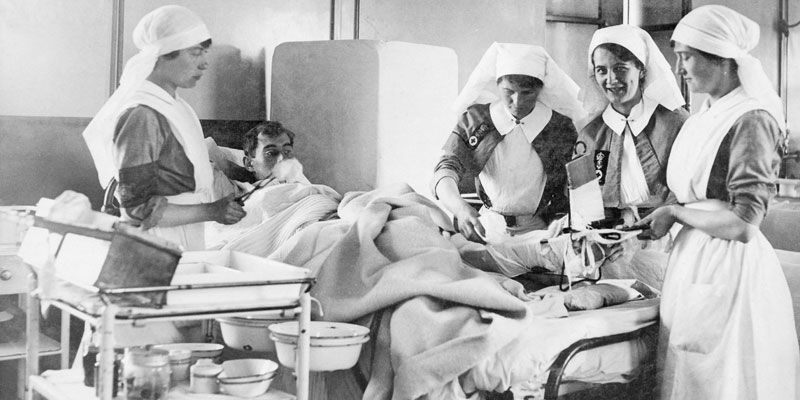

The First World War shook the entire planet, marking the first conflict of such a massive scale. The United Kingdom played an active role in the war, with cities across the British Empire contributing to the effort. Leeds was no exception: tens of thousands of men joined the frontlines, women laboured in military factories, and hospitals in the city were repurposed to treat wounded soldiers. Today, we will explore the role Leeds played in treating the wounded during the First World War. Next on leedsyes.com.
Establishments and Estates Converted into Military Hospitals
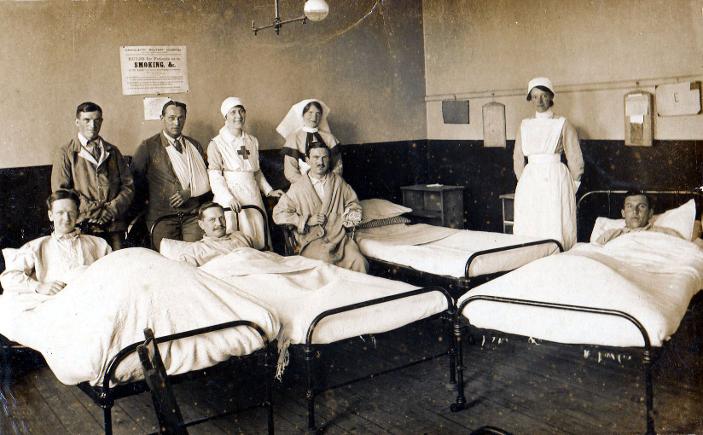
Leeds became one of the key medical centres during the First World War. The large number of wounded soldiers returning from the frontlines required significant medical resources. However, the city’s medical facilities were initially unable to accommodate the influx of injured soldiers. This led to an expansion of healthcare facilities and an increase in medical personnel. Leeds hospitals treated not only British soldiers but also wounded servicemen from Commonwealth nations.
Due to the high volume of casualties, country estates and houses in Leeds were converted into military hospitals. One of the main hospitals was Beckett’s Park Hospital. This historic building dates back to 1752 and had changed owners several times before Ernest Beckett sold the estate to the Leeds Corporation for £48,000 in 1908. The estate was purchased to create a public park and an educational institution. In 1912, the Leeds Training College moved to the newly constructed buildings and the west wing of Kirkstall Grange in Beckett’s Park. However, teaching here was short-lived. Two years later, Beckett’s Park was transformed into a military hospital. By the end of the war, 57,200 soldiers had been treated there. Beckett’s Park became one of Leeds’ primary medical centres during the war, with the training college resuming its activities on the site only in 1924.
Another significant site, Temple Newsam House, was also repurposed as a military hospital. From 1915 to 1917, its south wing was used as a convalescent hospital. This facility provided the final stage of recovery for wounded soldiers who were rehabilitating after illness or surgery. This iconic Leeds landmark played a vital role during the First World War.
Leeds as a Key Medical Centre During the War
During the First World War, Leeds factories and plants actively produced military supplies. However, the city was not only an industrial hub but also a crucial medical centre. Numerous military hospitals operated in Leeds, treating soldiers from both Britain and other Commonwealth countries. The war also brought new advancements in medical treatment. The First World War challenged doctors and scientists, as many soldiers suffered severe injuries. Physicians and surgeons experimented with innovative treatments such as plastic surgery and physiotherapy. Psychiatry also advanced significantly during this period, as many soldiers experienced “shell shock.”
The contributions of women during the First World War deserve special recognition. With Leeds’ men mobilised for the frontlines, women took on many traditionally male roles. In Leeds hospitals, many women worked as nurses and orderlies. At the beginning of the 20th century, these roles were typically performed by men. The war created a significant social shift, as women proved adept at caring for the sick, maintaining sterile environments, and administering injections.
This trend was not unique to Leeds or Britain. Women in many countries expanded the understanding of military service as being exclusively male. Women worked in factories, performed hard labour in agriculture, served in hospitals, and even worked as orderlies on battlefields. Additionally, women’s military units were formed in some countries and actively participated in combat. Interestingly, some women concealed their gender to serve in the army, although they were often discharged when their identities were discovered.
Women’s motivation to participate in the war varied. Some sought to support their husbands or fathers by staying close to them, while others wished to escape domestic duties and believed their contribution to the war effort could secure them the right to vote.
The First World War was a significant upheaval for Leeds and the entire country. However, the city’s residents did not stand idly by, striving in every possible way to support the British Army. The military hospitals in Leeds saved countless lives, making the city a major contributor to the treatment of wounded soldiers during the First World War.
We hope this material has been informative and provided you with valuable insights into Leeds’ role during the war.