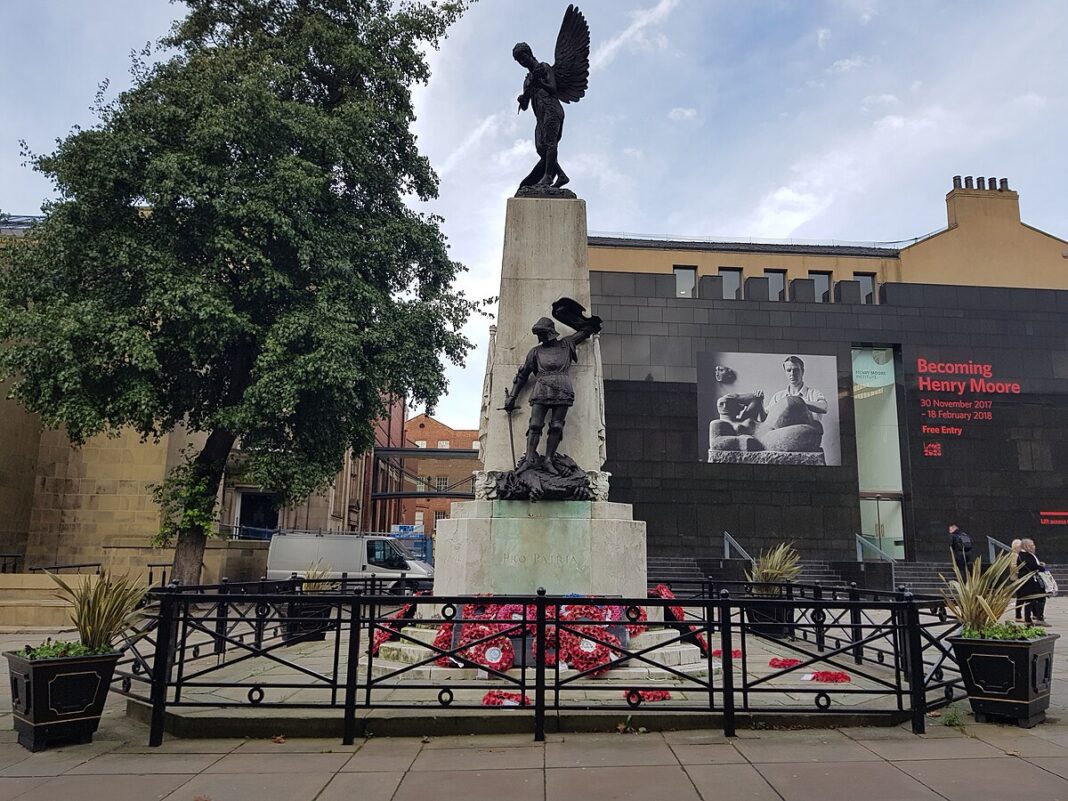

“Better a bad peace than a good war” – this phrase resonates deeply with those who have experienced the horrors of warfare. War brings no benefit to people, nations, or economies. Leeds, too, endured both World Wars. Fortunately, the city was never occupied. However, Leeds’ residents took part in the fighting, its industries supported the front, and hospitals treated the wounded. Today, we explore the First World War and its impact on Leeds. Next on leedsyes.com.
Losses in the War
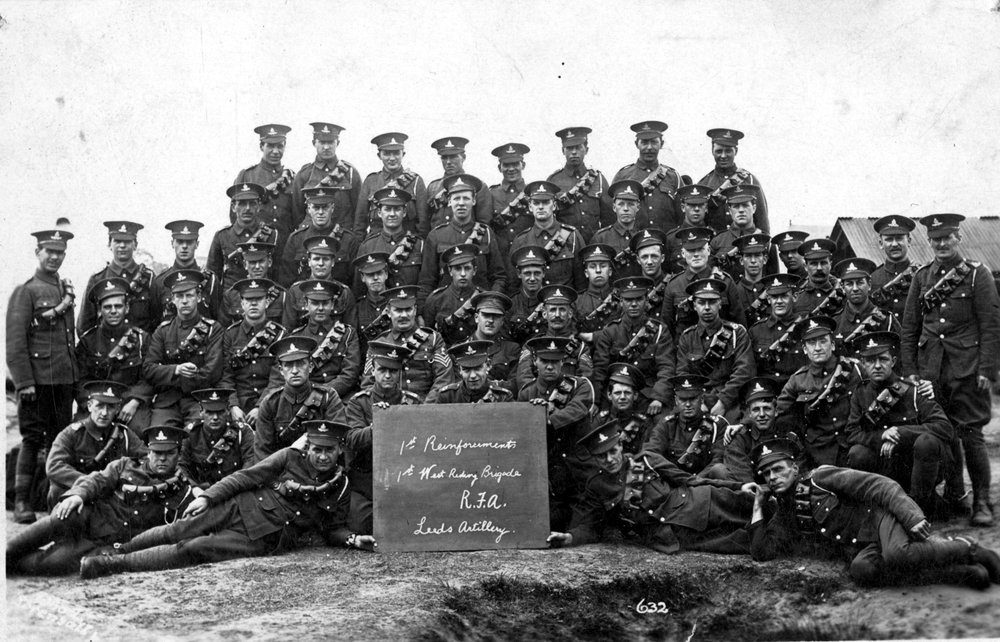
As the United Kingdom took part in the First World War, Leeds saw the mobilisation of its men. At the outset, 20,000 residents of Leeds were called up. Units such as the Leeds Rifles and Leeds Pals were formed. The absence of men had a significant impact on the city’s economy, but this was not the worst consequence. Many soldiers never returned home to their families.
On 1 July 1916, the Leeds Pals officers led their men into the “no man’s land.” This led to a battle in which the battalion was almost annihilated. Of 900 men, 750 were killed. The Battle of the Somme became a tragic chapter in Leeds’ history. Across the city, mourning families closed their curtains as a sign of grief. On nearly every street, at least one house had its windows shuttered.
Many of Leeds’ residents became heroes. For example, George Sanders of the Leeds Rifles was awarded the Victoria Cross for bravery and leadership during the Battle of the Somme. Sanders was also held as a prisoner of war for some time. After the war, he was further honoured with the Military Cross.
Leeds as an Industrial Hub
The people of Leeds made significant contributions on the home front. As a major industrial centre, the city’s factories quickly adapted to wartime needs, producing munitions, aircraft, blankets, uniforms, and parachutes. Leeds had been renowned for its textile industry before the war, and its factories scaled up production of military supplies. While this created new jobs, it also led to resource shortages.
The Barnbow munitions factory, built at the start of the war, became a key facility. Over three years, it produced 36 million cartridges and more than 24 million shells. The factory employed 16,000 people, over 90% of whom were women. On 5 December 1916, a devastating explosion at Barnbow killed 35 women and injured over 30 others. Due to wartime censorship, the tragedy was kept from the public and press. Only after the war did the full details of the incident emerge.
With men conscripted to the front, women took over their roles in factories and other sectors. This was an unprecedented change, marking an important step in shifting societal roles and increasing women’s participation in civic life.
Food Shortages in Leeds During the First World War
Leeds residents also faced food shortages during the war, driven by several factors:
- Naval blockade: Wartime actions restricted food imports, for which Britain was unprepared. This severely disrupted supplies to Leeds and other cities.
- Rising prices: Scarcity increased demand, driving up the cost of essential items like bread, meat, and milk, which heavily impacted families in Leeds.
- Rationing system: In 1918, a rationing system was introduced, limiting the quantity of goods families could purchase. Items like sugar and meat were only available with ration cards. Even those with money could not buy goods without a valid card.
These challenges created widespread societal frustration. Many residents grew vegetables on their plots to provide for their families.
Military Hospitals in Leeds
In addition to industrial contributions, Leeds provided care for wounded soldiers. Several military hospitals were established in the city, including one at Beckett’s Park Training College. Between 1914 and 1918, 57,200 soldiers were treated there. Other notable sites, including museums, galleries, and the Temple Newsam estate, were repurposed as hospitals.
War brought no joy, and when an armistice was declared, the city erupted in celebrations. Fireworks were set off near Leeds Town Hall, where 40,000 people gathered to mark the end of the conflict.
During the First World War, over 10,000 soldiers from Leeds lost their lives, and a total of 82,000 Leeds residents served in the military.
This is how the First World War impacted Leeds. We hope this material has been insightful and provided you with new information about your city during the war.