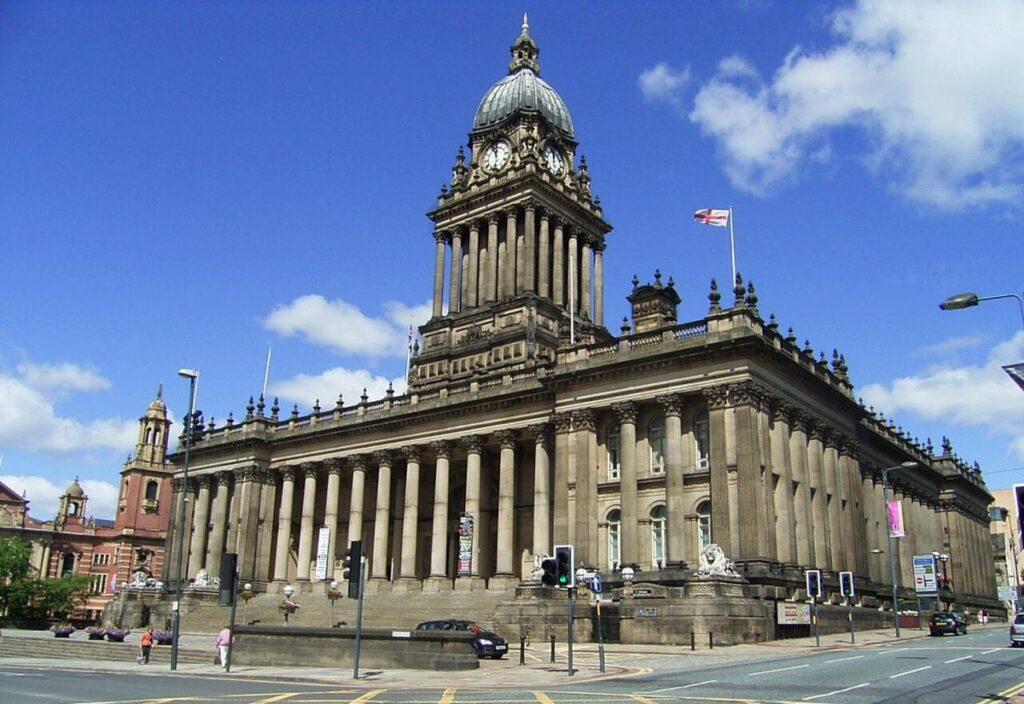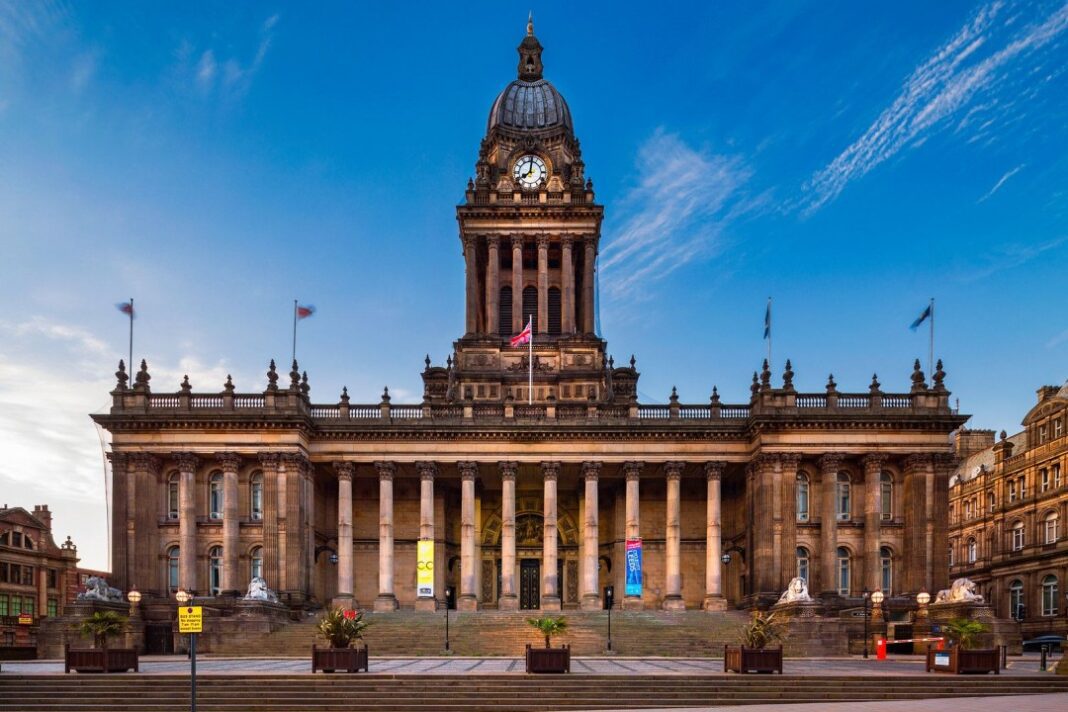

The architecture of Leeds is truly remarkable. Thousands of tourists come to our city to see the unique architectural ensembles, enjoy the wonderful atmosphere, and stroll through the charming streets. Leeds Town Hall holds a special place in this landscape. It is a nineteenth-century municipal building located on Headrow (formerly Park Lane). Notably, it is one of the largest town halls in the United Kingdom. The building was conceived as a municipal palace to showcase the power and success of Victorian Leeds. It was officially opened by Queen Victoria in 1858. But let us go through everything in detail. You can read more about the history of the town hall’s creation on the LeedsYes website.
History: Where It All Began
Before 1813, Leeds Corporation was based in Moot Hall, which was also used for judicial purposes. However, as the city began to grow rapidly, it became clear by the mid-nineteenth century that the building was no longer sufficient. Consequently, the building was demolished in 1825. A new court building was constructed on Park Row.
The idea for the town hall arose from competition. Leeds and Bradford, neighbouring cities, had long been in rivalry. After Bradford constructed St George’s Hall, Leeds decided to build its own town hall.
The famous reformer and doctor John Dickin Heaton fanned the flames with his discussions about “well-known old cities whose town halls are a permanent glory to their residents.”
In 1850, the Leeds City Council held public meetings and decided to build the town hall. However, an attempt to raise funds through public subscription failed, so the decision was made to fund the construction with city funds. The new building was meant to symbolise the importance of the industrial centre and the civic pride and confidence of the city.
It was decided to build the new structure on Park Lane, an area on the edge of the city. The land for construction was purchased from wealthy merchant John Blades for £9,500.
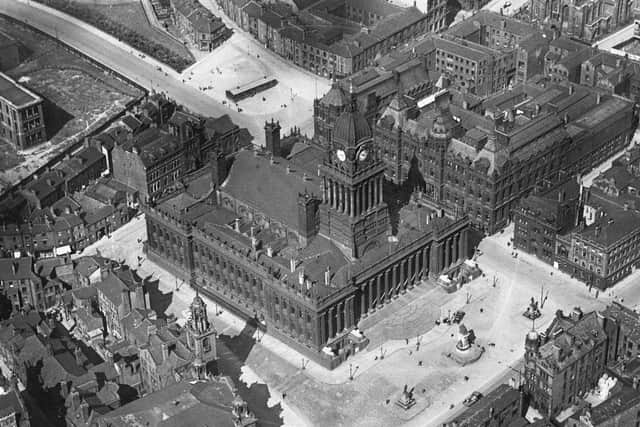
Construction of the Town Hall
In 1852, Leeds City Council announced a tender for the design of the town hall through an open competition. However, the task given to the architects came with a “catch”: they were to create a building that had never been seen before. In one building, there were to be training halls, concert halls, courtrooms, municipal offices, and rooms for the mayor’s reception. The hall had to accommodate 8,000 people, all within a limited budget, which was later the subject of much ridicule. Ambitious plans, but a minimal budget.
A total of around 16 submissions were made, though more were expected. The winner was Cuthbert Broderick, a young architect from Hull, virtually unknown outside his hometown. He was just 19 years old.
It is worth noting that Leeds had never built a structure of such scale.
On August 17, 1853, the first stone was laid in the foundation by Mayor John Hope Shaw. The ceremony was grand, and the celebrations continued with a public banquet, festivities, and fireworks.
Various obstacles delayed the project. The tight timeline meant that Queen Victoria had to open the town hall. Another significant problem was the shortage of workers due to the outbreak of the Crimean War in October 1853, which saw many men called up to the army. As a result, the workforce was unstable, slowing progress.
The most expensive part of the building was the Council Chamber in the southeast corner (now known as the Albert Room), which cost about £125,000 (£13 million in 2021). Despite the working population of Leeds being near the brink of poverty, city leaders allocated these funds for the room’s decoration.
Many changes were made to the design, including the inclusion of an organ, ventilation towers, and vases on the roof parapet.
There was considerable debate about adding the tower, as this would require extra funds that had already been stretched. However, in 1856, the tower was officially approved at a cost of £5,500.
The Beautiful Outcome
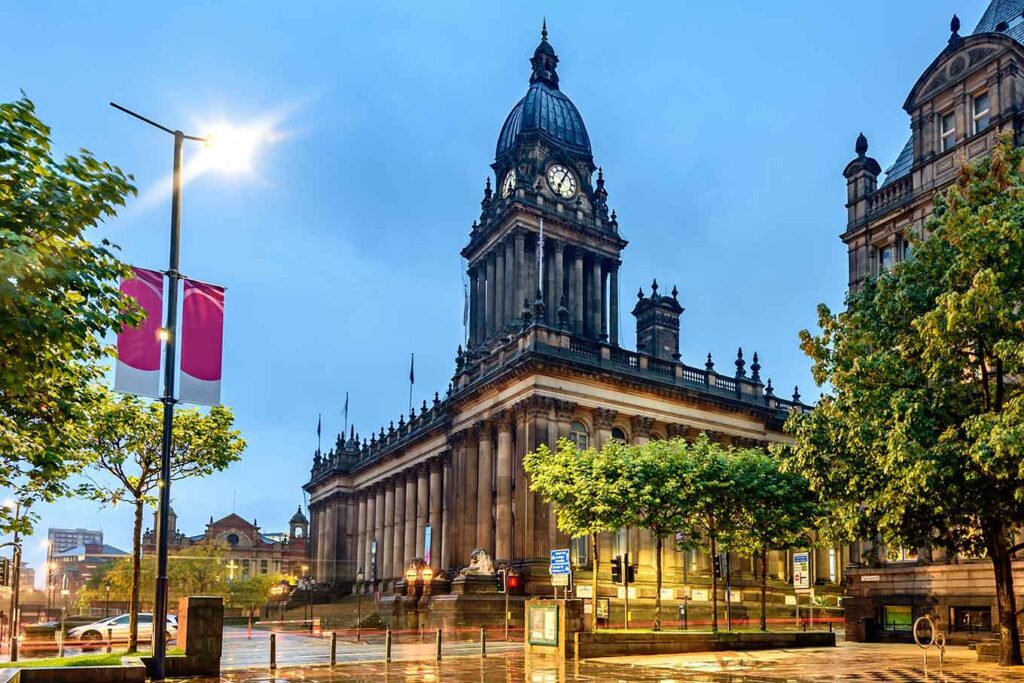
As a result, Leeds Town Hall is in the classical style, but it is a powerful architectural monument standing atop steps on a mound. The mound was intentionally constructed to enhance the building’s grandeur and magnificence.
The southern, main facade on Headrow features a clock tower 68.6 metres high. The main entrance is in the form of an arch, with three ornate wrought-iron doors. There is also a smaller entrance on the east side.
The Victoria Hall is lined with marble columns with gilded capitals and bases. Various mottos are painted around the walls. Today, this hall is used for orchestral concerts. In the centre of the vestibule stands a white marble statue of Queen Victoria, standing 2.4 metres tall.
It is important to note that the town hall housed municipal departments, a courtroom, a police station, and spaces for concerts and public events.
The Opening of the Town Hall
The construction budget exceeded the original estimate by three times. However, the Leeds City Council considered the town hall a fantastic investment and believed in the future success of the city. Moreover, the building was to be opened by Queen Victoria herself.
On September 6, 1858, Queen Victoria arrived in Leeds. At the central railway station, she was greeted by a large crowd (over 400,000 people). The Queen stayed the night at Woodsley House on Clarendon Road, the home of Mayor Peter Fairburn. Of course, the queen’s visit was a huge celebration for Leeds: the streets were decorated with flags and banners, a festival was organised, and a local exhibition was held at the Wool Exchange.
The following day, September 7, 1858, Leeds Town Hall was officially opened. However, the building was not yet fully completed.
Two weeks later, the British Association for the Advancement of Science held its annual meeting at the town hall. Leeds had long sought to host this event, but it was only made possible after the construction and opening of the municipal town hall. Over the years, the building hosted numerous conferences, exhibitions, and various events.
The Future of the Building
World War II did not spare the town hall. In 1941, Leeds was bombed, and the eastern side of the town hall was hit. The roof and walls on Calverley Street were damaged, but everything was later repaired. During the war, an ARP post operated in the building. In 1942, a restaurant opened at the town hall where people could enjoy hot meals at affordable prices. This venue became popular even after the war but was closed in 1966.
For almost the entire last century, the town hall was blackened with soot and smoke due to the rapid industrial development of the city. In 1972, the building was officially cleaned for the first time. The town hall was later classified as a Grade I building.
In 2019, a large-scale renovation project began for the entire town hall.
This is the story of Leeds’ legendary building, which undoubtedly remains one of the city’s most prominent landmarks. We hope this article has been informative, and you have learned more about the construction of Leeds Town Hall.