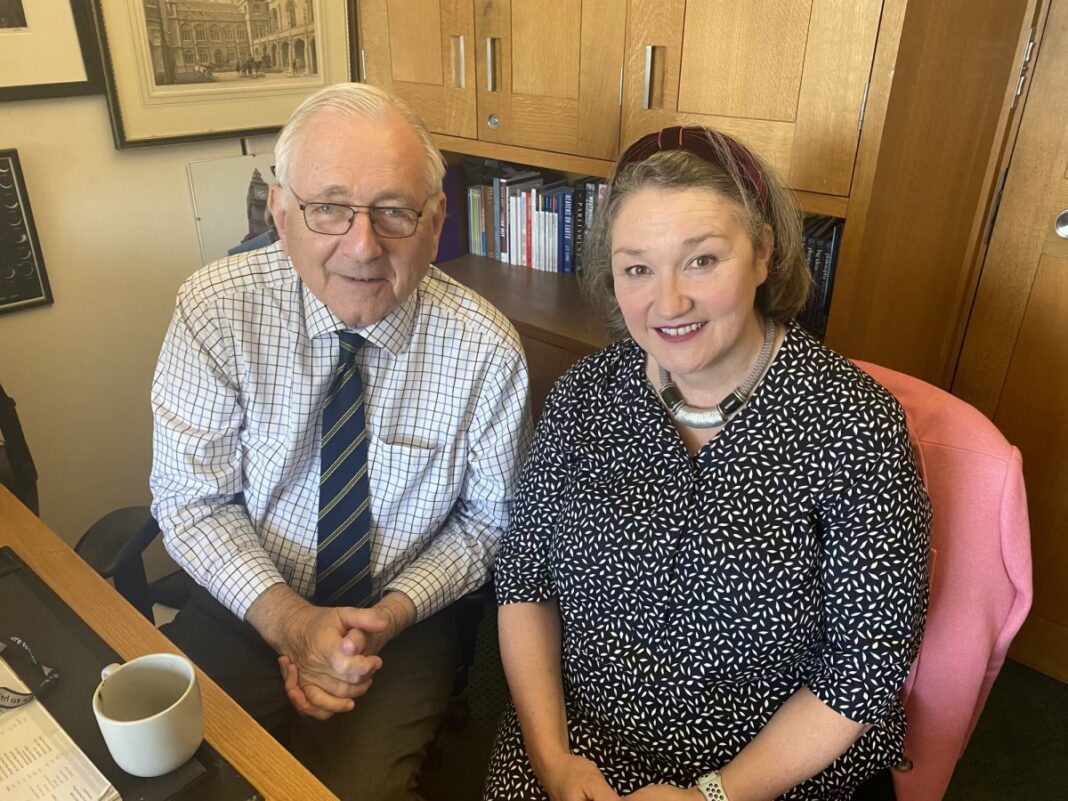

Politics plays a vital role in society, fulfilling numerous functions such as protecting citizens’ rights, uniting communities, and managing resources. Politicians are tasked with ensuring development, peace, and social protection. Gillian Mortimer is one such politician who strives to provide economic, political, and social stability in her region and the country. Mortimer is also a native of Leeds. Learn more about her current work on leedsyes.com.
Early Life and Education
Gillian Mortimer was born in Leeds in 1965 to a working-class family. She attended Parklands Girls’ School. Remarkably, she began pursuing higher education later in life alongside her children, studying law at Teesside University at the age of 50.
Before entering politics, Mortimer worked as a farmer in Niton, raising cattle and selling meat from her own farm. Today, the farm operates as a luxury hotel.
Political Career
After turning 50, Mortimer decided to change careers and ventured into politics. In 2019, she served as a councillor for Raskelf & White Horse Ward on the Hambleton District Council, a position she held until 2021. That same year, she ran as the Conservative candidate in East Leeds during the general election but was unsuccessful.
In 2021, Mortimer made another attempt, running for Parliament in Hartlepool. During her campaign, she emphasised the need for post-pandemic recovery, including job creation and business support. Despite accusations of tax evasion during the campaign, these claims were unfounded. Mortimer won the by-election with 6,940 votes, becoming the MP for Hartlepool.
The following year, Mortimer was appointed Parliamentary Private Secretary. However, she resigned after two weeks, citing a desire to focus on her constituency. In the 2024 general election, Mortimer lost her seat.
About the Conservative Party
As a member of the British Conservative Party, Mortimer represents one of the two main political forces in the United Kingdom, alongside the Labour Party. The party’s ideology is centre-right. Throughout British parliamentary history, there have been 20 Conservative prime ministers.
The party was officially founded in 1834, though its roots are debated. Some historians trace its origins to the Tory Party, while others link it to the 18th-century Whigs led by William Pitt the Younger. The term “Tory,” initially a pejorative, was later adopted by the party. The term “Conservative” was proposed in 1830 by John Wilson Croker.
In 1868–1874, the party underwent reforms to appeal to a broader electorate. In 1886, it allied with the Liberal Unionist Party led by Spencer Cavendish and Joseph Chamberlain. Under Margaret Thatcher in 1976, the party’s programme shifted significantly, bringing it closer to ordinary citizens.
Traditionally, the Conservative Party’s base included homeowners, business owners, farmers, developers, and the middle class, predominantly in rural areas and suburban England. However, following the 2016 EU referendum, the party began attracting working-class voters.
The Conservative Party opposes Irish unification and independence for Scotland and Wales. It supports maintaining the British Empire’s legacy, adheres to social conservatism, advocates for an independent nuclear weapons programme, and remains committed to NATO membership.
We hope this article has provided valuable insights into Gillian Mortimer, a Leeds-born MP, and the history of the Conservative Party.
What are your thoughts on the party’s ideology? Share your comments on social media—we value your opinion.